



Miriam Makeba sang a well-known tune in regards to the 16 June 1976 rebellion in her birthplace, South Africa. The protest used to be a pivotal level within the combat in opposition to apartheid and white minority rule within the nation. The tune used to be referred to as Soweto Blues and its opening strains move:
The youngsters were given a letter from the Grasp.
It stated not more Xhosa, Sotho, not more Zulu
Refusing to conform they despatched a solution
That’s when the policemen got here…
The tune remembers the occasions of that day when South African schoolchildren, marching peacefully in Soweto to protest the imposition of Afrikaans as an legit language of instruction along English in Black colleges, had been shot down by way of the police of the apartheid regime.
Soweto Blues used to be additionally the name selected by way of my publishers for the quilt of my ancient analysis at the politics of South African jazz and widespread song.
Many highschool scholars in South Africa – and lots of in their academics – weren’t fluent in Afrikaans, observed because the language of the oppressor. The transfer used to be a part of a push, dubbed “Bantu Education”, to cut back Black training and minimize it off from global alternatives and “subversive” English-language concepts. The gadget’s architect, Hendrik Verwoerd, had declared that Black youngsters will have to by no means be skilled above the extent of “hewers of wood and drawers of water”.
Soweto Blues is among the two compositions maximum carefully related to the occasions of June 16. The opposite, Isililo (Tears of Soweto), from Sakhile, used to be written looking back, in 1982, as the gang’s co-leader, saxophonist Khaya Mahlangu, mirrored on his nightmare recollections of Soweto on that day.
Composed and recorded in Kumasi, Ghana
Ask who composed the tune, and the solution could be trumpeter Hugh Masekela and/or his ex spouse Miriam Makeba. The tune, formally launched in 1977 by way of Makeba, is best-known within the model launched on her 1989 album, Welela.
Phonocomp, Mercury
The lyrics are straight away recognisable as being penned by way of Masekela the rhymer – “Just a little atrocity/Deep in the city”.
However the melody tells a larger, pan-African tale. It used to be co-written by way of the trumpeter and guitarist Stanley Kwesi Todd, founding father of Ghanaian ensemble Hedzoleh (“freedom”) Sounds.
Masekela used to be presented to the west Africans by way of Afrobeat legend Fela Kuti in 1973, and the collaboration produced 3 albums led by way of his identify: Introducing Hedzoleh Soundz (1973); I Am Now not Afraid (1974); and The Boy’s Doin’ It (1975).
However there have been different collaborations between Kwesi and Masekela too, together with the 1977 You Advised Your Mama To not Concern. That used to be recorded in Kumasi, Ghana with Kwesi as co-producer, and launched in the United States by way of the brand new Casablanca label, sooner than that imprint settled right into a pop and disco song identification.
Makeba got here from her exile house in Guinea to report; there have been compositions by way of Masekela and Todd, tunes tailored from custom, and a name monitor about exile composed by way of South African singer and songwriter Letta Mbulu. Soweto Blues closed the A-side. The unique album, regrettably, is lately exhausting to search out.
A marketable name
So how did it finally end up as my e-book name? It wasn’t my aim.
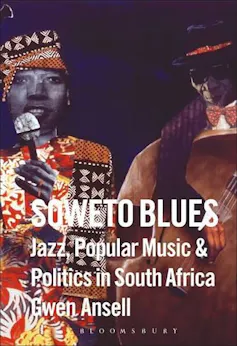
Bloomsbury Publishing
The primary name I sought after used to be Black Heroes, alluding to a 1976 Tete Mbambisa track paying tribute to each the younger martyrs of ‘76 and to US jazz celebrity John Coltrane. That looked as if it would me to sum up the connection between South African and Black American jazz as torches lights the best way to freedom.
However it seemed that “somebody in marketing” didn’t suppose the 2 phrases “Black” plus “Heroes”, would promote. “Aren’t there any other song titles that might be catchier?” A back-and-forth ensued, till Soweto Blues got here up. “That’s it! ‘Soweto’ always sells!”
The 1976 rebellion sparked in Soweto, however unfold around the nation, from the city settlements of Langa and Gugulethu within the Cape to the agricultural villages of the North West province. Oldsters scoured mortuaries for his or her lifeless youngsters, lots of whom had it seems that been shot within the again. No one is aware of exactly what number of died, however the nationwide determine is estimated as neatly north of 700.
And simply because the emerging itself can’t be narrowed to what came about in Soweto – even though the identify “sells” – so the tune paying tribute can’t be confined to South Africa by myself. It got here from a trumpet-player exiled in the United States, a singer sheltered by way of Guinea, and a musician born in Ghana.
Part a century later, the phrases of the tune nonetheless have classes in regards to the occasions of June 16. The tale of its advent teaches too: a few shared African historical past wherein borders didn’t outline humanity.